
What timber rot looks like before it gets obvious
By the time a deck board gives way underfoot or a fence panel leans out of line, the rot has been working for a while. The early signs are quiet, and they are worth knowing because catching rot in one board is a small job while catching it in a whole structure is not.
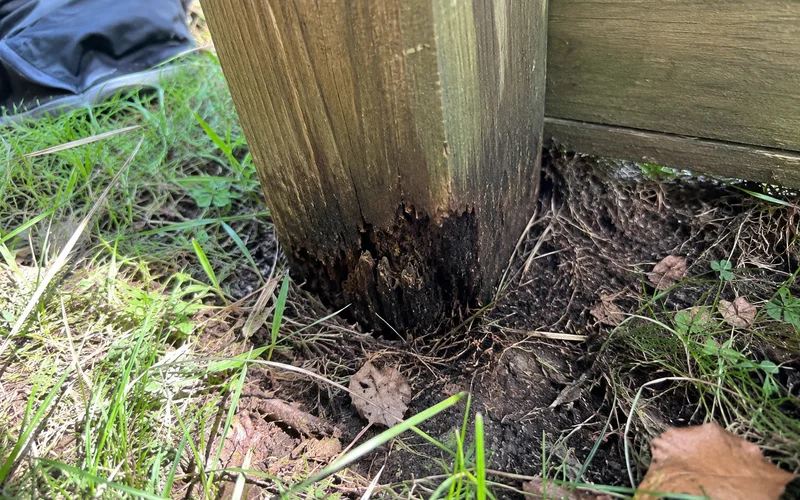
Look for timber that has darkened in patches rather than fading evenly. Weathering turns timber a uniform silver-grey, which is a surface issue. Rot shows up as dark, damp-looking areas that stay dark after a dry week. Watch for a spongy feel underfoot, fibres that look stringy or crumbly, paint or oil lifting in one localised spot, and a musty smell around the base of a post.
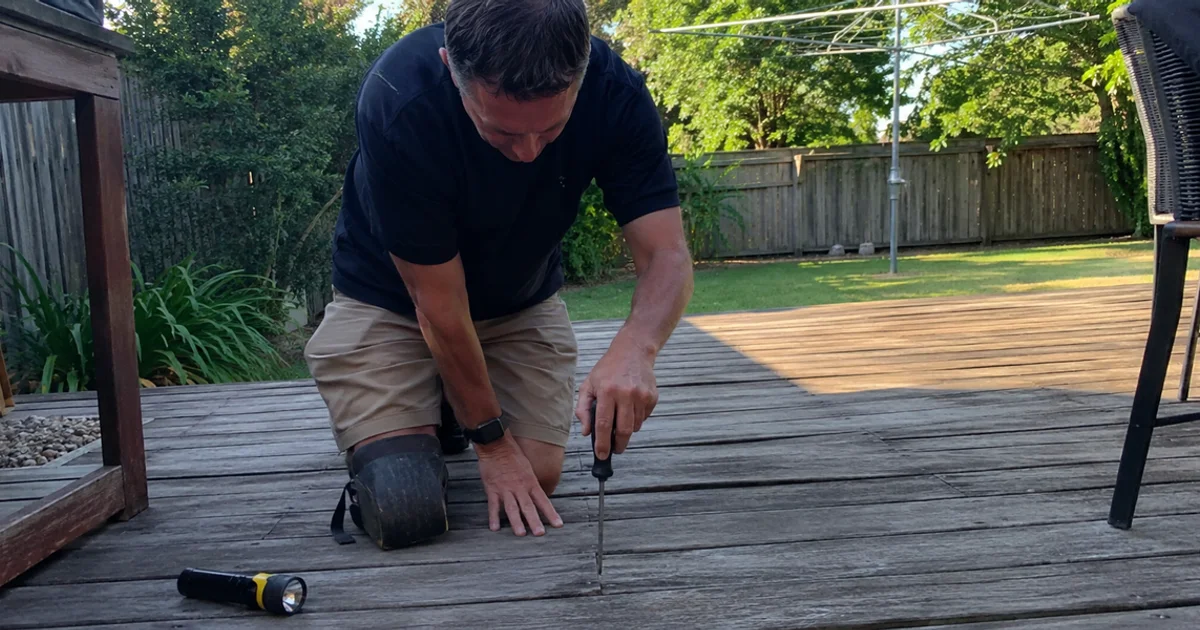
The tell that matters most is the screwdriver test. Push a screwdriver into the timber with moderate pressure. Sound timber stops it almost at once. Rotted timber lets it slide in, and the fibres come away soft. Do it at the base of fence posts, at deck board ends, and where boards sit on joists. Those are the places that stay wet longest, and rot starts where water lingers rather than where it lands. It is the same check we run before quoting any timber repairs, because it separates a sand-and-oil job from a replacement.
Grey is not the same as rotten
A deck that has gone silver-grey has lost its coating to UV, not its structure. If the screwdriver stops firm, that deck needs a sand and two coats of oil, not replacing.
Wet rot and dry rot behave differently
Both are fungal, both destroy the timber’s structure, and the distinction matters because it changes the size of the repair.
Wet rot is the common one in Australian backyards. It needs a sustained moisture source and stays close to it, which is why it turns up at the base of posts sitting in damp soil, under deck boards that never see sun, and behind fascia where a gutter has been overflowing. Because it does not travel far from its water source, the repair is usually contained.
Dry rot is less common and more serious. Despite the name it still needs moisture to start, but once established it can spread through drier timber and even across masonry in search of more, which means the cut-back has to go well past what you can see. Fine grey strands or a dry, cracked, cube-like pattern in the wood are the signs to take seriously.
| Wet rot | Dry rot | |
|---|---|---|
| Needs constant moisture | Yes | To start, then spreads |
| Spreads beyond the damp area | Rarely | Yes, can travel |
| Typical appearance | Dark, soft, spongy | Dry, cracked, cube-like |
| Repair scope | Usually contained | Wider cut-back needed |
What happens if you leave it
Rot does not stop. It moves along the grain into whatever stays damp, so a fence post soft at ground level eventually cannot hold the panel, and a rotted joist takes the sound boards above it out of service. The cost curve is steep: one spliced post is a small job, a whole fence line is not.
There is a safety angle too. A deck relies on its joists and bearers, and rot in a bearer is not visible from above. If your deck is raised, that check matters more than anything happening to the boards you can see.
Repair, splice or replace
Where rot is localised and the surrounding structure is sound, the sensible fix is to cut the affected section out and splice in new timber. Done properly, with the cut taken well past the damage and the new piece fixed and finished to match, a splice lasts as long as the original. Fence posts get set on a galvanised post stirrup so the new timber never sits in wet soil, which is what killed the old one.
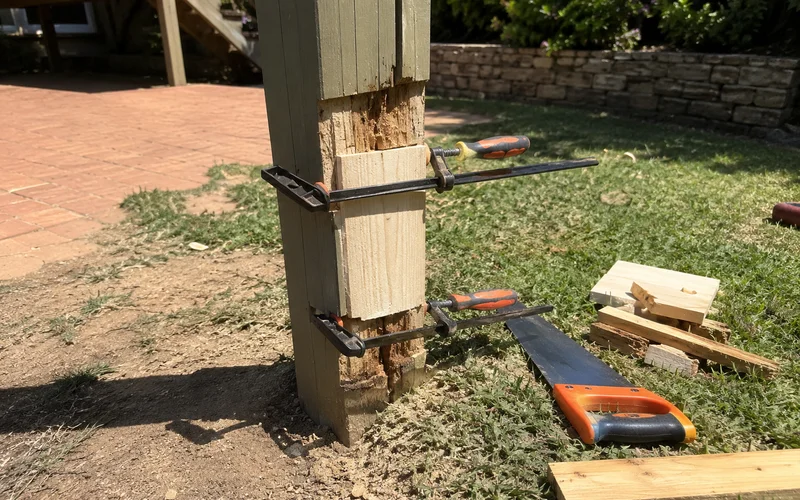
Replacement is the right call when rot has travelled through a post, when several joists are affected, or when the structure has moved enough that patching would leave it out of line. Anyone who reaches for full replacement without probing first is guessing. Fence work in particular is often repairable within the existing run, which is why we treat it as part of ordinary fence repairs rather than a rebuild.
Prevention is mostly about drying time. Keep soil and mulch below the timber line, clear the gap between deck boards so water drains, oil timber before it goes grey rather than after, and fix the overflowing gutter that is keeping the fascia wet.
If you have found a soft spot and are not sure how far it goes, a five-minute probe answers it. We check before we cut, tell you honestly whether it is a splice or a replacement, and price it fixed either way. Book a free quote and we will take a look.